The WRIS Development Lifecycle: Strong Applications Start with a Strong Process.
The WRIS Development Lifecycle: Strong Applications Start with a Strong Process.
A Smoothed-Out Development Process That Keeps Projects on Track
When software projects run into trouble, it’s rarely because of the technology. More often, it’s a lack of structure, visibility, or coordination.
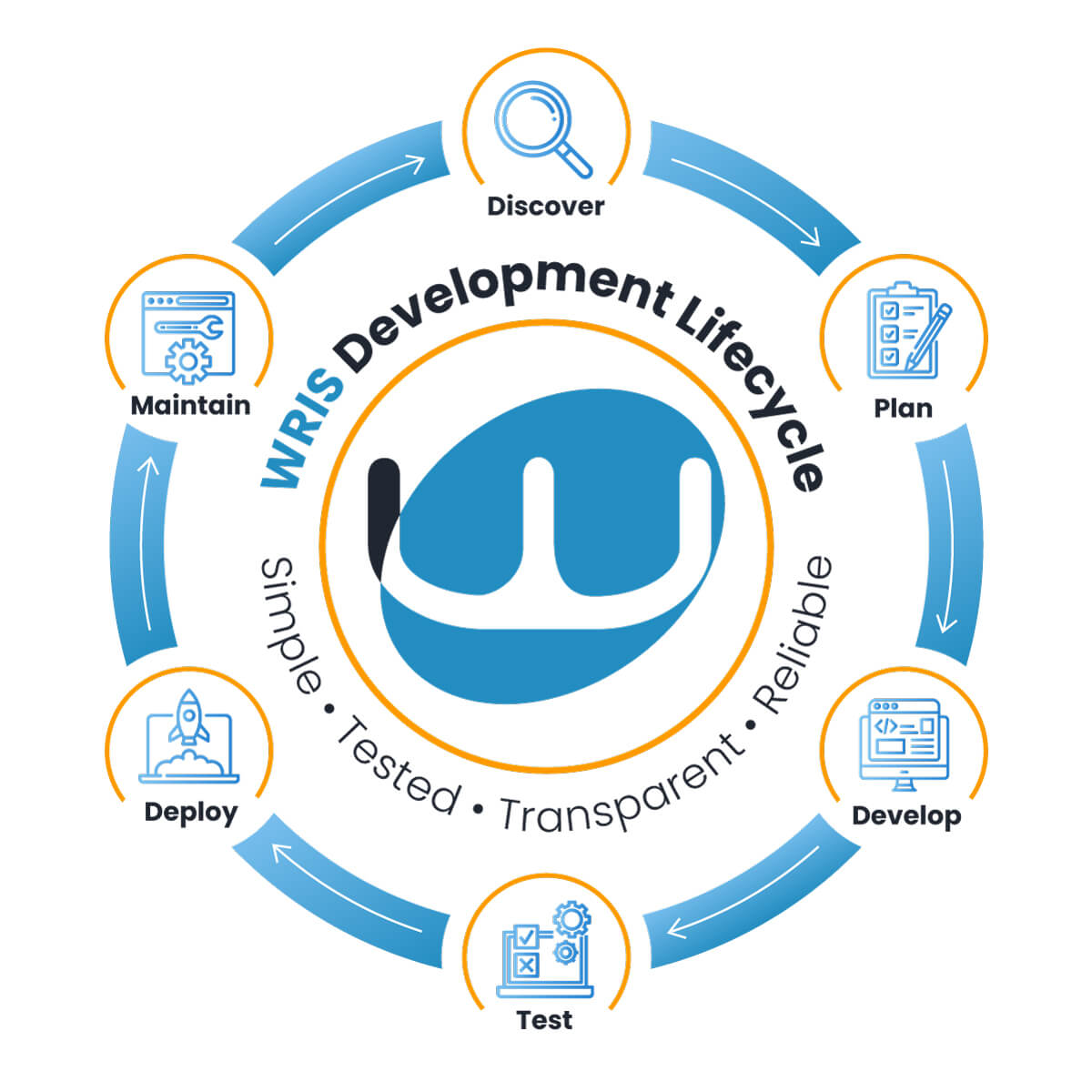
At WRIS, we follow a clear and proven development lifecycle to keep development projects organized, efficient, and reliable. Whether we’re modernizing a legacy application or building new functionality, our process helps reduce risk, improve communication, and ensure your system is built to last.
Below is a look at how we guide projects from planning to long-term support.
Why a Structured Development Lifecycle Matters
A defined workflow helps ensure:
- projects stay on schedule and within scope
- code remains secure and maintainable updates are delivered safely and efficiently
- teams stay aligned and informed
- your system can grow with your business
Instead of reactive fixes, you get a strategic approach designed for long-term success.
1. Discovery & Planning
Building the right solution from the start
Every project begins with understanding your business goals and technical needs. We collaborate with you to define requirements, identify dependencies, and design a smart architecture.
This early planning prevents surprises later and ensures technology decisions support future growth.
What this phase includes:
- requirements and workflow analysis
- system architecture planning
- timeline and milestone definition
- risk and dependency identification
2. Project Management & Workflow Coordination
Keeping everything organized and visible
Clear communication is key to successful development. We use structured project management workflows and tools like Jira to organize tasks, track progress, and prioritize work.
Clients benefit from:
- clear milestones and deliverables
- visibility into project progress
- organized ticket tracking and issue resolution
- structured change management when needs evolve
This keeps projects moving forward without confusion or last-minute surprises.
3. Code Repository & Version Control
Protecting your code and enabling safe collaboration
Your application’s codebase is a valuable asset. We use Atlassian’s Bitbucket to secure our Git repositories and manage our development teams.
Version control allows for:
- secure, centralized code storage
- full change history and accountability
- parallel development without conflicts
- quick recovery if issues arise
This ensures stability while allowing continuous improvement.
4. Development & Code Standards
Building ColdFusion applications that last
We follow established ColdFusion best practices to build applications that are scalable, secure, and easy to maintain.
This includes thoughtful architecture, documentation, and performance optimization that supports future enhancements and reduces technical debt.
5. Continuous Integration & Deployment (CI/CD)
Delivering updates safely and efficiently
Modern development requires reliable deployment processes. Our BitBucket Pipelines allow updates to be released quickly and safely.
Benefits include:
- faster and more predictable releases
- reduced downtime and deployment risk
- staging environments for safe testing
- rollback safeguards if needed
You get improvements faster without sacrificing stability.
6. Quality Assurance & Testing
Ensuring reliability before release
Before updates go live, we test functionality, performance, and compatibility across environments.
This helps identify issues early and ensures a smooth user experience.
7. Ongoing Maintenance & Lifecycle Support
Keeping your system secure and future-ready
Software continues to evolve after launch. We provide ongoing support to ensure your application remains secure, optimized, and aligned with your business needs.
Ongoing support may include:
- security updates and patching
- performance monitoring
- feature enhancements
- modernization and optimization
Built for Reliability, Transparency, and Long-Term Success
Our structured development lifecycle does more than organize code; it creates clarity and confidence.
From planning to deployment and beyond, WRIS ensures your ColdFusion applications remain stable, secure, and ready to evolve with your business.
How We Manage Development Work with Jira
To keep projects organized and transparent, we use Jira project management software to track development tasks from the initial request through testing and deployment. Every feature, change request, or bug fix is logged as a ticket so our team can prioritize work, assign tasks, and monitor progress throughout the development process.
This structured task management system helps ensure nothing falls through the cracks and provides clear visibility into the status of each request.
Our Development Task Workflow
Each request moves through a defined workflow as it is implemented and released:
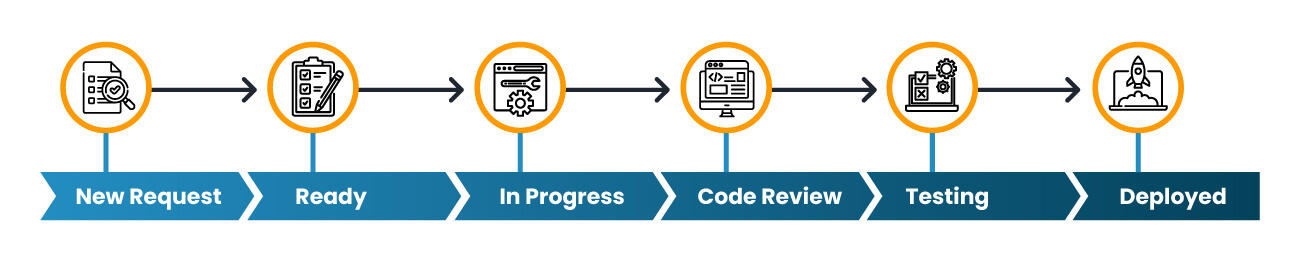
This development workflow helps maintain code quality, ensures proper testing, and allows our team to deliver updates in a controlled and reliable way.
Conclusion
Successful software projects rely on more than just strong technical skills—they require a clear process, structured project management, and reliable development practices. At WRIS, our development lifecycle ensures every project moves through a consistent path from discovery and planning to development, testing, deployment, and ongoing maintenance.
By combining disciplined project management with tools like Jira, version control, and structured testing workflows, we help clients build applications that are stable, maintainable, and ready to grow with their business. The result is a development process that emphasizes transparency, quality, and long-term reliability.
Whether we’re modernizing legacy ColdFusion systems or developing new functionality, our goal is always the same: deliver dependable solutions through a process our clients can trust.
Related Blogs
Before Google: The Wild West of Early Search Engines

WRIS at Adobe ColdFusion Summit 2026: Innovation, AI, and Community
.jpg&w=640&h=360&c=center)
What ADA Compliance Actually Means for Your Website in 2026
.jpg&w=640&h=360&c=center)