National Archives Project for Womens Religious Wordpress Site
The National Archives Project for Women Religious – Website Development
A mission-driven website created to establish a digital presence and facilitate vital connections between religious congregations and archival experts. WRIS Web Services designed and developed a custom WordPress website for The National Archives Project for Women Religious (NAPWR), bringing their established print branding into a cohesive digital platform while creating a direct channel for congregations to access professional archival support.
Services Provided:
Project Management • UX/UI

Key Results:
New Digital Service Hub:
- Established a professional platform to manage requests for archival assistance and consultations.
Streamlined Connection:
- Created clear pathways for congregations to reach trained archivists and lay professionals.
ART Visibility:
- Highlighted the Archival Response Team’s availability for both phone consultations and in-person visits.
Resource Accessibility:
- Focused on helping congregations with limited resources find the specific guidance they need to preserve their legacy.
Brand-Consistent Design:
- Successfully translated existing professional brochures into a polished, trustworthy online experience.
Conclusion:
The National Archives Project for Women Religious now has a robust digital foundation that connects congregations with professional preservationists. By providing a clear and engaging platform to request archival support, Wris Web Services has enabled NAPWR to better fulfill its mission of ensuring religious legacies are documented and protected for the future. The new site serves as a vital bridge, ensuring that history is preserved through expert guidance and direct community engagement.
The Challenge:
The National Archives Project for Women Religious lacked a digital presence to reach congregations needing to preserve their history. While they had high-quality print materials, they needed a centralized platform to communicate their specialized services—such as collection assessment and the creation of finding aids—and to deploy their Archival Response Team (ART) to those with limited resources. The goal was to transform a passive information set into an active outreach tool that could bridge the gap between congregations and the specialized help they require.
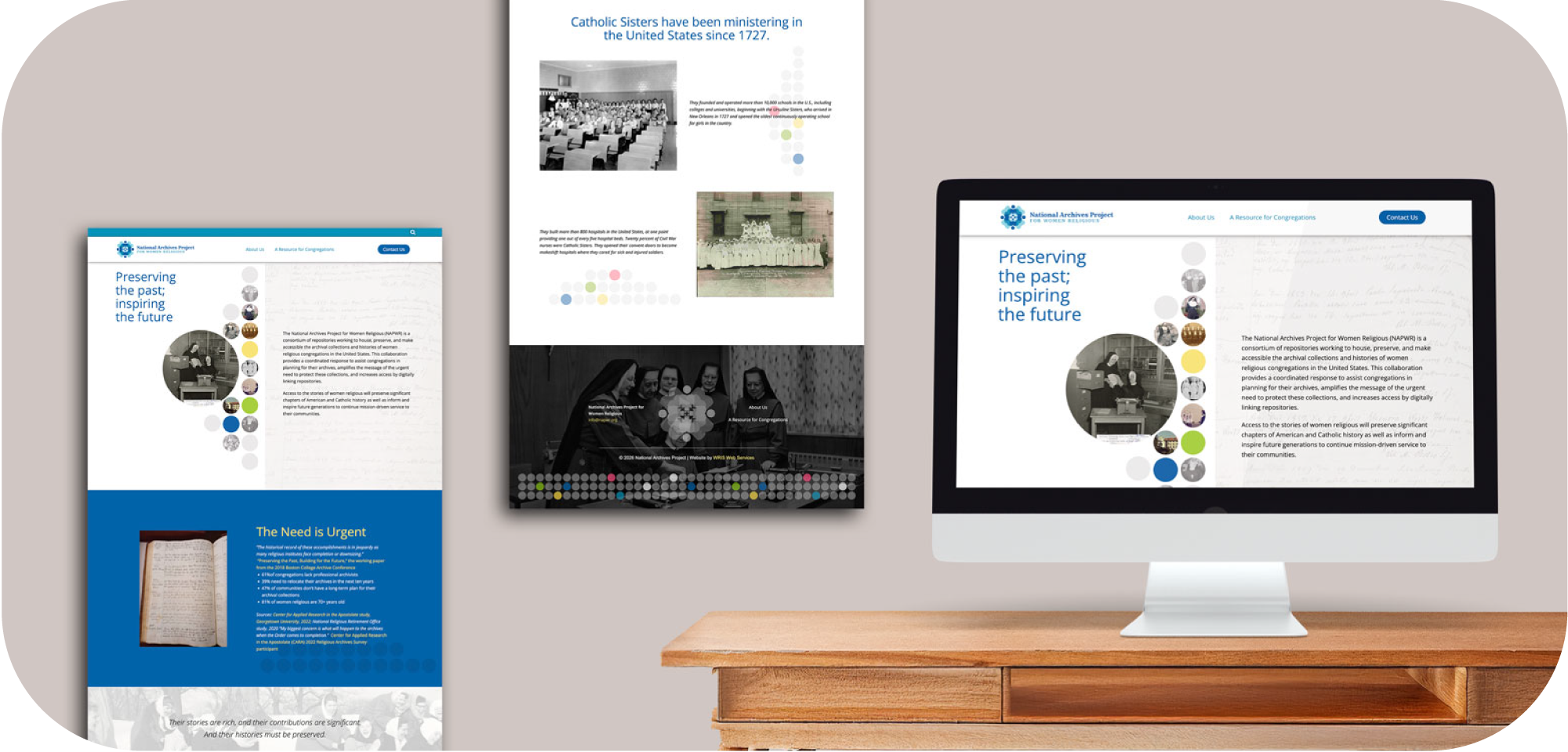
The Solution:
WRIS Web Services developed a custom WordPress site using Elementor Pro, transforming brochure-based content into an interactive service portal. The design prioritizes accessibility and clarity, allowing congregation leadership and archivists to easily request consultations or in-person visits. The site was structured to highlight the specific ways NAPWR assists, from initial planning for the future of an archive to setting up physical collections.